You need a mesh system that handles fast NBN speeds, covers large areas, and supports dozens of devices. For 2026, choose Wi-Fi 7 models like TP-Link Deco BE63 or Netgear Orbi 970 for future-proof speed and capacity. If you’re on NBN 100–250, Google Nest Wifi Pro or eero 6 offer strong performance and smart-home integration. Gamers and heavy users should prioritise tri-band, multi-gig backhaul systems. There’s a best pick no matter your home size or internet use.
Quick Guide
- TP-Link Deco BE63 leads for Wi-Fi 7 speed and seamless coverage, ideal for future-proofing Aussie homes.
- Netgear Orbi RBKE963 excels in high-capacity environments, supporting 250+ devices with multi-gig backhaul.
- Google Nest Wifi Pro offers strong smart-home integration and 6 GHz support for modern connected households.
- For rural areas, Starlink Gen 3-compatible systems like Nest Wifi Pro ensure reliable, wide-reaching mesh performance.
- ASUS ZenWiFi ET9 delivers 10 Gbps wired speeds and AiProtection, perfect for security-conscious, high-throughput home networks.
Best Mesh Wi-Fi Systems for Large Australian Homes
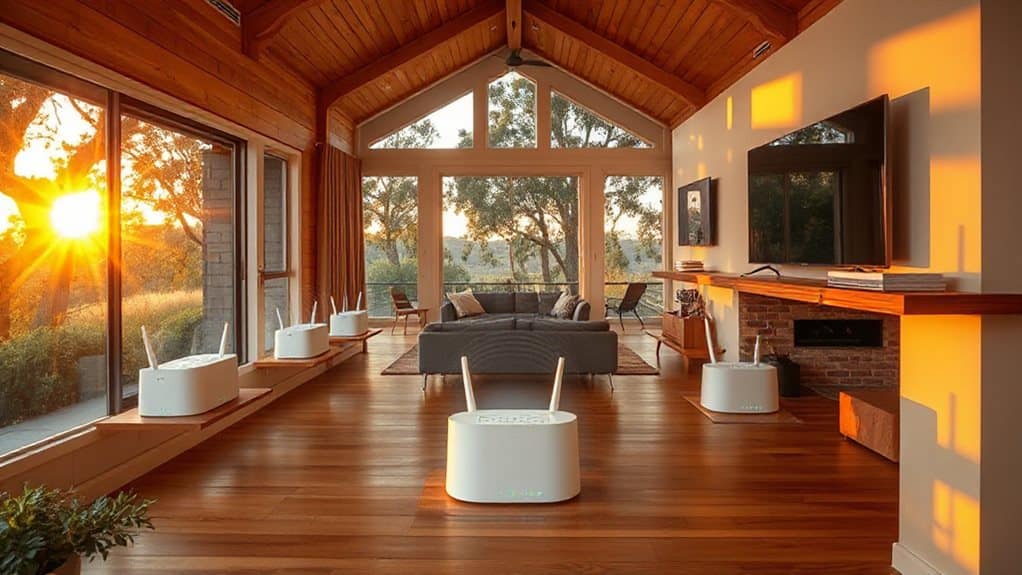
When it comes to covering large Australian homes with reliable, high-speed Wi-Fi, mesh systems are your best bet for eliminating dead zones and keeping all your devices connected. For seamless performance across sprawling layouts and multi-storey designs, mesh systems use multiple nodes to create a single, unified network that ensures strong coverage in every room and backyard (eliminating dead zones). Choose the TP-Link Deco BE63 for top performance with Wi-Fi 7, fast Ethernet ports, and seamless range. For heavy usage, the Netgear Orbi 970 delivers extreme speed and capacity, ensuring freedom to stream, game, and work without limits. Consider systems with Wi‑Fi 6E support if you need additional interference‑free capacity for multiple 4K/8K streams.
Wi-Fi 7 Vs Wi-Fi 6E: Which One Do You Need in 2026?
While both Wi‑Fi 6E and Wi‑Fi 7 deliver fast, reliable connections, you’ll want to know which one actually meets your needs in 2026.
Choose Wi‑Fi 6E if you have fewer than 50 devices and want solid performance at a lower cost. Opt for Wi‑Fi 7 if you need ultra-fast speeds, lower latency, and support for 100+ devices—ideal for future-proofing your connected home with freedom to grow. Routers with 2.5G ports and hardware acceleration are especially useful when running encrypted VPN traffic to keep speeds high.
Best Mesh Routers for NBN 100–250 Speeds
If you’re upgrading your home network for NBN 100–250 speeds, picking the right mesh router can make all the difference in performance and coverage.
Choose Google Nest Wifi Pro for seamless 6 GHz support and smart integration. Prefer value? TP-Link Deco X55 or X50 delivers strong speeds and wide reach. ASUS ZenWiFi XD5 offers AiProtection security, while Netgear Orbi RBKE963 crushes dead zones with multi-gig backhaul. Consider a mesh system that supports a multi-gig backhaul for future-proofing your network.
Budget Mesh Wi-Fi That Handles 4K Streaming & Gaming
You can get solid 4K streaming and smooth gaming without breaking the bank.
Systems like the eero 6 and TP-Link Deco X50 deliver strong Wi-Fi 6 performance and handle multiple high-bandwidth activities easily.
With good coverage and support for many devices, these budget picks keep your network reliable during peak use.
Many affordable setups also pair well with Dolby Atmos soundbars to deliver immersive audio for living-room setups.
Best Budget Picks
Several budget-friendly mesh Wi-Fi systems deliver reliable performance for 4K streaming and online gaming on typical Australian nbn plans. You’ll get solid coverage and speed without overspending.
The Amazon eero 6 offers great value, with smart home features and expandability. TP-Link Deco X55 covers large homes and handles many devices. Both are easy to set up and keep your internet fast, stable, and hassle-free.
4K Streaming Performance
Often, budget mesh Wi-Fi systems deliver more than expected—especially when it comes to handling 4K streaming and online gaming on typical Australian nbn plans.
You’ll find the TP-Link Deco X55 and ASUS ZenWiFi XD5 offer strong dual-band speeds ideal for seamless streaming. The eero 6 handles multiple 4K streams smoothly, while the Deco XE75’s 6GHz band guarantees lag-free gaming—no wiring needed.
Gaming With Low Latency
While seamless 4K streaming sets a baseline for modern home networks, low-latency gaming demands more from your mesh Wi-Fi system—especially when every millisecond counts.
Choose Wi-Fi 6E or tri-band models like TP-Link Deco XE5300 or ASUS ZenWiFi ET9 for sub-50ms pings. Use wired backhauls where possible, prioritise devices, and expand coverage to eliminate dead zones—keeping your gameplay smooth, responsive, and uninterrupted.
Best Mesh Routers for Starlink in Rural Areas
You’ll want a mesh router that works seamlessly with your Starlink setup, especially if you’re in a rural area with spotty coverage.
Systems like the Gen 3 Mesh Router or Google Nest Wifi Pro give you strong range and support for multiple devices across large properties.
Just make sure to pick one with Wi-Fi 6E or better to handle outdoor signal drops and thick walls.
Starlink Compatibility Explained
If you’re using Starlink in a rural Australian home, getting reliable Wi-Fi across large areas or thick-walled buildings means choosing the right mesh setup.
Gen 1 doesn’t support mesh nodes.
Gen 2 needs an Ethernet Adapter for third-party systems.
Gen 3 and Mini routers offer native mesh support.
Use Gen 3 for best performance—tri-band Wi-Fi 6, two Ethernet ports, and seamless app pairing make expanding coverage simple and effective.
Mesh Range For Large Properties
When covering vast rural properties like farmsteads with multiple outbuildings, a high-performance mesh Wi-Fi system is essential for maintaining strong, consistent connectivity.
You’ll want systems like Starlink Gen 3 Mesh or Netgear Orbi 960, which handle thick walls and long distances.
TP-Link Deco XE75 and Eero Pro 6E offer wide coverage and seamless roaming.
Choose tri-band models to reduce interference and enhance speed across acres.
Wi-Fi 7 Performance Outdoors
For large rural properties where outdoor coverage matters, Wi-Fi 7 delivers faster speeds and lower latency across multiple devices, making it a strong upgrade over older standards.
You’ll get better outdoor range with third-party systems than official Starlink nodes. Use wired mesh where possible. Pick IP56-rated or higher gear to handle rain and dust. Gen 3 routers support Wi-Fi 6, but Wi-Fi 7 systems offer more capacity.
Top Tri-Band Mesh Systems for Full Home Coverage
While seamless connectivity across every corner of your home is no longer a luxury, achieving it demands the right tri-band mesh system—especially in larger or multi-story Australian households.
You’ll want Wi-Fi 6E or 7 models like Google Nest Wifi Pro or TP-Link Deco BE63 for speed and coverage. They handle dozens of devices, eliminate dead zones, and support smart home integration—giving you reliable, fast internet wherever you need it.
Best Mesh Routers for Alexa & Google Smart Homes
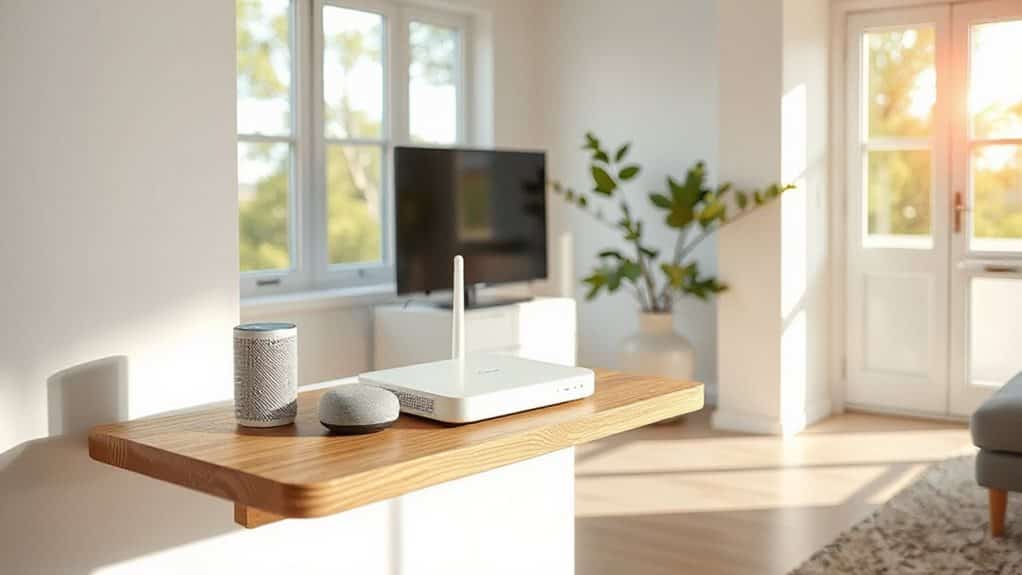
You want a mesh router that works seamlessly with your Alexa or Google smart home devices. Systems like eero and Nest Wi-Fi let you control your network and connected gadgets using voice commands.
Just set up the app, link your voice assistant, and manage your smart home with ease.
Smart Home Integration
When it comes to keeping your smart home running smoothly, a reliable mesh Wi-Fi system makes all the difference.
You get seamless Alexa and Google integration, voice control, and automated routines. Systems like Google Nest Wifi Pro and Netgear Orbi support Thread, Zigbee, and hundreds of devices.
With strong coverage, smart steering, and dedicated backhaul, your smart home stays fast, secure, and free.
Voice Control Compatibility
If you’re building a smart home with Alexa or Google Assistant, choosing a mesh Wi-Fi system that supports seamless voice control is essential.
Google Nest Wifi Pro and eero 6 offer native integration for smooth voice commands. TP-Link Deco and ASUS ZenWiFi work reliably with both platforms. Netgear Orbi delivers top speed and capacity, ensuring responsive voice control even in large, device-packed homes.
Best Mesh Systems for 250+ Devices
While most households won’t come close to maxing out their network, supporting 250+ devices demands a mesh system built for heavy-duty performance and seamless scalability.
You’ll want the Netgear Orbi RBKE963—it handles that load effortlessly with quad-band Wi-Fi 6E. For high capacity and customization, it’s your best pick.
Others like Linksys Velop Pro 6E/7 offer strong alternatives with Wi-Fi 7 speed and reliability across large areas.
Fastest Mesh Wi-Fi Systems in Real-World Speed Tests
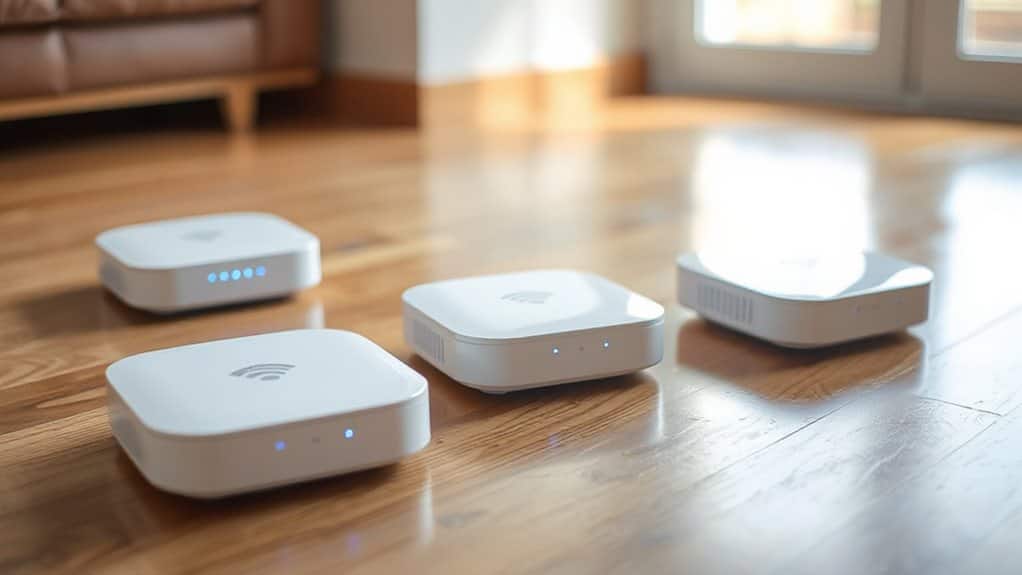
Push your internet to its limits with mesh Wi‑Fi systems that deliver blistering speeds in real-world conditions.
You’ll dominate downloads with the TP‑Link Deco BE95 and Netgear Orbi 970, both hitting 2.5Gbps. The Deco BE63 matches that pace, while the ASUS ZenWiFi ET9 adds 10Gbps ports for wired speed freaks.
These top performers keep your whole home fast, no matter where you roam.
Best Expandable Mesh Kits for Growing Households
You’ve seen which mesh systems deliver the fastest real-world speeds, but speed alone won’t solve coverage gaps as your household grows.
Expandable kits like TP-Link Deco BE63 or eero 7 let you add nodes easily. Google Nest Wifi Pro scales seamlessly, while ASUS ZenWiFi supports wired backbones.
Linksys Velop Pro 6E and Acer Predator T7 offer high-speed growth for gaming or offices—perfect for developing Aussie homes.
Wrapping Up
You now have the key understandings to choose the right mesh Wi-Fi system for your Australian home in 2026. Whether you need fast speeds, wide coverage, or support for hundreds of devices, there’s a system that fits. Pick Wi-Fi 7 for future-proof performance or Wi-Fi 6E for proven reliability. Match your router to your NBN speed, smart home setup, or rural connection. Upgrade wisely—your home network depends on it.