
You need a reliable HDMI splitter that handles 4K or 8K signals without lag or dropouts across multiple displays. Choose models like the FeinTech 1×2 with down-scaler or 8K HDMI 2.1 splitters for high-bandwidth performance. Guarantee HDCP 2.2 support for streaming, use high-speed HDMI 2.0/2.1 cables under 5 meters, and pick powered splitters for stability. Check EDID management and audio pass-through to match your setup. The right choice keeps your displays in sync and avoids handshake issues—discover which models match your needs exactly.
Quick Guide
- Choose HDMI 2.1 splitters with 48 Gbps bandwidth for 8K@60Hz or 4K@120Hz support in high-performance setups.
- Ensure HDCP 2.2+ compliance to avoid streaming issues with protected 4K content from services like Netflix.
- Use powered splitters for stable 4K HDR performance, especially when driving multiple displays or daisy-chaining.
- Select models with EDID management to maintain compatibility across mixed-resolution displays.
- Opt for splitters with eARC or audio extraction if routing high-quality audio to soundbars or receivers.
| 2-in-1 HDMI 2.0 Switch Splitter Hub | 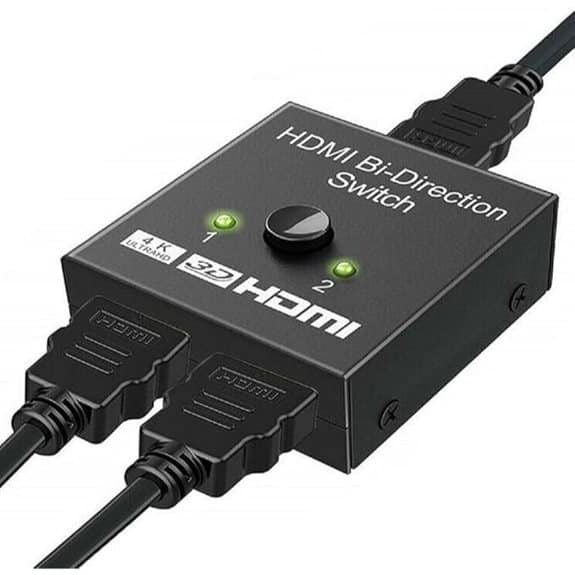 | Best 2-in-1 Switch/Splitter | Type: Bidirectional switch/splitter | Max Resolution: 4K@30Hz | HDMI Version: HDMI 2.0 | VIEW LATEST PRICE | Read Our Analysis |
| 4K HDMI Splitter 1×2 Dual Output | 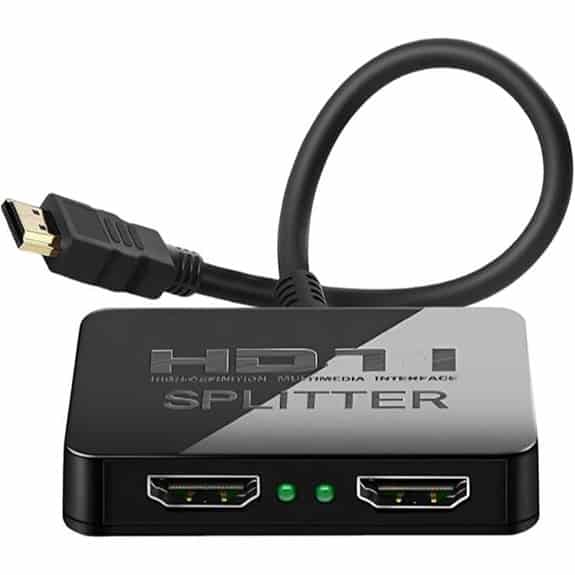 | Best Budget 4K Splitter | Type: 1×2 splitter (mirror) | Max Resolution: 4K@30Hz (60Hz possible) | HDMI Version: HDMI 2.0 (implied) | VIEW LATEST PRICE | Read Our Analysis |
| StarTech HDMI Splitter 1×2 4K 30Hz | 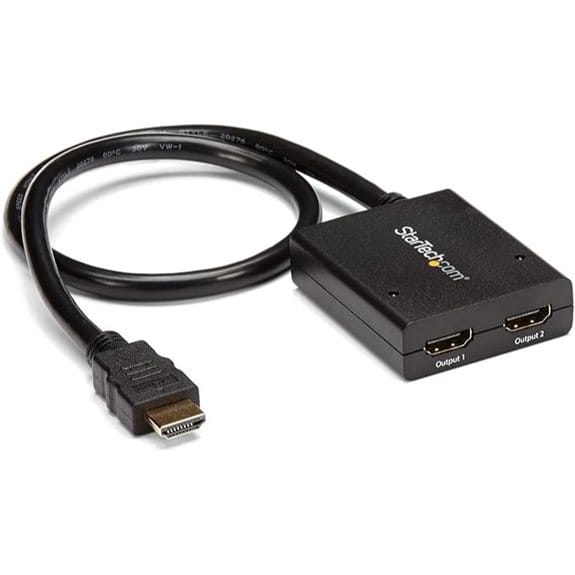 | Most Reliable Basic Splitter | Type: 1×2 splitter (mirror) | Max Resolution: 4K@30Hz | HDMI Version: HDMI 1.4 (backward compatible) | VIEW LATEST PRICE | Read Our Analysis |
| Greenhouse HDMI Splitter 1 Input 4K | 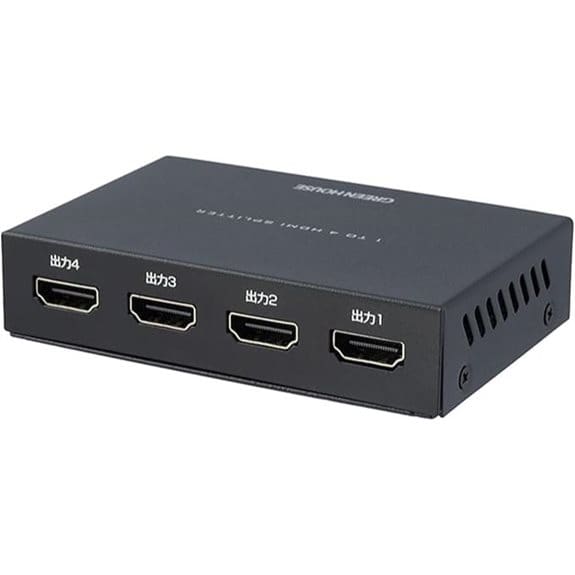 | Best for Multi-Display Setup | Type: 1×4 splitter | Max Resolution: 4K@30Hz | HDMI Version: HDMI 2.0 | VIEW LATEST PRICE | Read Our Analysis |
| FeinTech HDMI 2.0 Splitter 1 x 2 with Down-Scaler 4K HDR UHD | 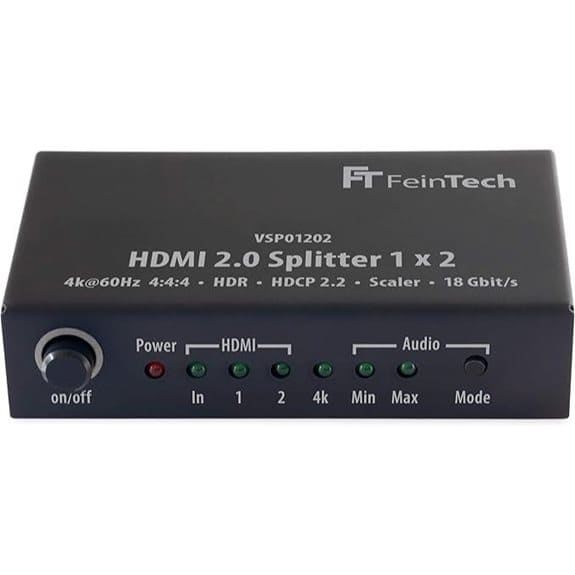 | Best for 4K HDR Scaling | Type: 1×2 splitter with downscaler | Max Resolution: 4K@60Hz | HDMI Version: HDMI 2.0 | VIEW LATEST PRICE | Read Our Analysis |
| WAVLINK Quad HDMI Splitter 4K@60Hz | 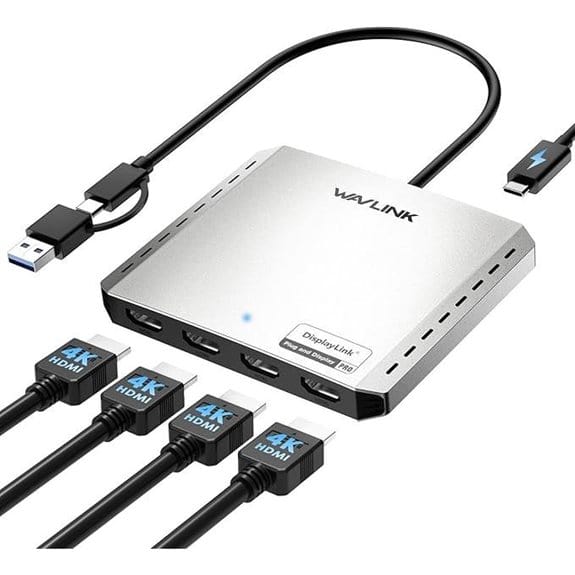 | Best USB-C Multi-Monitor Hub | Type: Quad HDMI splitter (extended/mirror) | Max Resolution: 4K@60Hz | HDMI Version: HDMI 2.0 (via DisplayLink) | VIEW LATEST PRICE | Read Our Analysis |
| PORTTA HDMI 4×1 Multiviewer Switch | 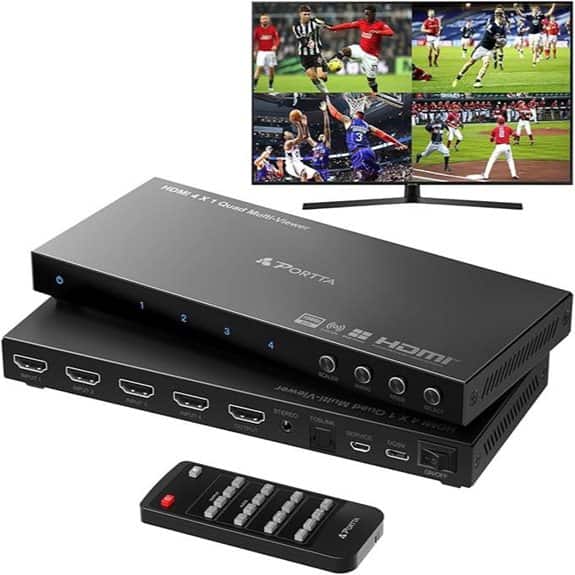 | Best Multiviewer Switch | Type: 4×1 multiviewer switch | Max Resolution: 1080p@60Hz | HDMI Version: HDMI 1.4 | VIEW LATEST PRICE | Read Our Analysis |
| HDMI Splitter 4K 60Hz with ARC/eARC | 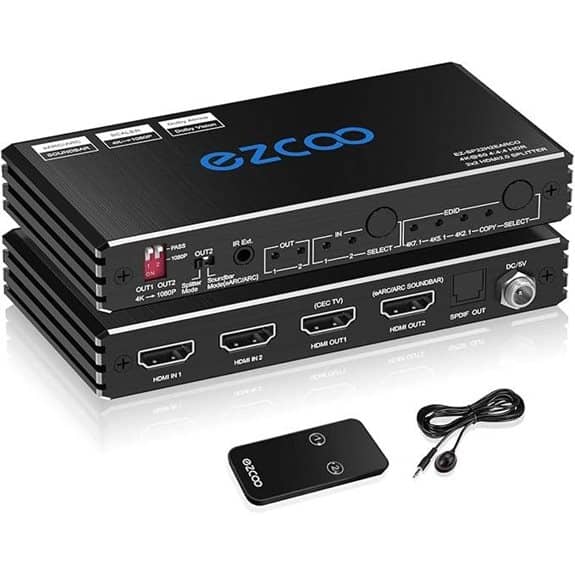 | Best eARC Soundbar Solution | Type: Bi-directional 1×2/2×2 splitter/switch | Max Resolution: 4K@60Hz | HDMI Version: HDMI 2.0 | VIEW LATEST PRICE | Read Our Analysis |
| 8K HDMI 2.1 Splitter 1×2 | 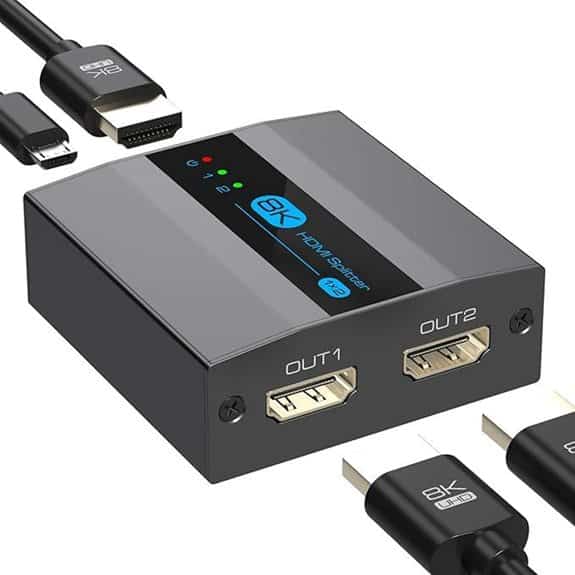 | Best 8K Future-Proof Splitter | Type: 1×2 splitter (mirror) | Max Resolution: 8K@60Hz | HDMI Version: HDMI 2.1 | VIEW LATEST PRICE | Read Our Analysis |
| HDMI Splitter 1×2 4K for Dual Monitors | 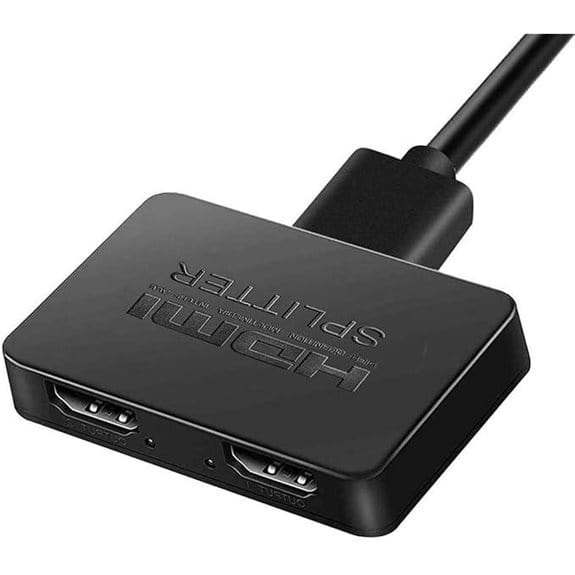 | Best Compact Design | Type: 1×2 splitter (mirror) | Max Resolution: 4K@30Hz | HDMI Version: HDMI 2.0 | VIEW LATEST PRICE | Read Our Analysis |
More Details on Our Top Picks
2-in-1 HDMI 2.0 Switch Splitter Hub
If you’re looking to streamline your home entertainment setup without sacrificing video or audio quality, the BIGTEDDY 2-in-1 HDMI 2.0 Switch/Splitter Hub is a solid choice—especially if you juggle multiple devices or displays. You can switch between two inputs or split one signal to two displays with ease. It supports 4K@30Hz, 1080p, and 3D video, plus audio formats like Dolby and DTS. Just press the button to toggle sources—no power or drivers needed. Use high-speed HDMI 2.0 cables up to 5 meters for best results. One display works at a time in split mode.
- Type:Bidirectional switch/splitter
- Max Resolution:4K@30Hz
- HDMI Version:HDMI 2.0
- Power Source:No external power (USB not required)
- Number of Outputs:2 outputs
- HDR Support:No HDR mentioned
- Additional Feature:Bidirectional switch/split mode
- Additional Feature:Manual toggle with LED
- Additional Feature:No external power needed
4K HDMI Splitter 1×2 Dual Output
Get the most out of your streaming setup with the MINDORLEN 4K HDMI Splitter 1×2, a reliable choice for anyone needing to mirror one video source to two displays simultaneously. You simply connect your laptop, game console, or TV box to the splitter, then link two HDMI displays—it handles the rest. It supports up to 4K@30Hz, with compatibility for 4K@60Hz if your devices allow. No drivers or power supply are needed—just plug in and go. Remember, both screens will show the same image. Use the included HDMI and micro USB cables for quick setup. Always check your source’s display settings to match the resolution.
- Type:1×2 splitter (mirror)
- Max Resolution:4K@30Hz (60Hz possible)
- HDMI Version:HDMI 2.0 (implied)
- Power Source:USB powered
- Number of Outputs:2 outputs
- HDR Support:Not specified
- Additional Feature:Includes HDMI and USB cables
- Additional Feature:Mirrors identical 4K signal
- Additional Feature:Plug-and-play no setup
StarTech HDMI Splitter 1×2 4K 30Hz
Featuring reliable 4K 30Hz video support and seamless duplication of your HDMI signal to two displays, the StarTech HDMI Splitter 1×2 is an excellent choice for streamers and home theater users who need consistent, high-quality video distribution. You get 3D video support and full compatibility with 1080p and 720p devices. It connects directly to your source with a built-in HDMI cable and powers via USB or the included adapter. At just under 79 grams, it’s compact and easy to set up. No batteries are needed. With no wireless features, it focuses purely on stable, wired performance—ideal for clutter-free streaming setups.
- Type:1×2 splitter (mirror)
- Max Resolution:4K@30Hz
- HDMI Version:HDMI 1.4 (backward compatible)
- Power Source:USB or AC adapter
- Number of Outputs:2 outputs
- HDR Support:3D video only (no HDR)
- Additional Feature:Built-in HDMI source cable
- Additional Feature:Powered via USB or adapter
- Additional Feature:Universal power adapter included
Greenhouse HDMI Splitter 1 Input 4K
The Greenhouse GH-HSPK4-BK HDMI Splitter is ideal for streamers and content creators who need to send a single 4K video source to multiple displays without sacrificing quality. You get one input and four HDMI outputs, supporting 4K at 30Hz or Full HD up to 144Hz for smooth gaming and streaming. It’s USB-powered, so setup is simple—just connect and go. You can even cascade it up to three levels for larger setups. With no batteries needed and a compact design, it’s reliable and easy to place. Plus, it maintains high image quality across all connected devices.
- Type:1×4 splitter
- Max Resolution:4K@30Hz
- HDMI Version:HDMI 2.0
- Power Source:USB powered
- Number of Outputs:4 outputs
- HDR Support:Not specified
- Additional Feature:4-output HDMI distribution
- Additional Feature:Supports 3-level cascading
- Additional Feature:USB powered compact design
FeinTech HDMI 2.0 Splitter 1 x 2 with Down-Scaler 4K HDR UHD
If you’re streaming 4K HDR content and need to send it to both a 4K TV and an older Full HD display without losing frame rate or audio quality, the FeinTech HDMI 2.0 Splitter 1 x 2 with Down-Scaler makes setup simple and reliable. It delivers 4K HDR10 or Dolby Vision to one screen while downscaling to 1080p HDR on the other, preserving refresh rates. You get full support for Dolby Atmos, DTS-HD, and HDCP 2.2, with EDID settings adjustable via a switch. Use high-speed HDMI cables up to 5 meters for 4K. The included 5V power supply guarantees stable performance.
- Type:1×2 splitter with downscaler
- Max Resolution:4K@60Hz
- HDMI Version:HDMI 2.0
- Power Source:External power supply (included)
- Number of Outputs:2 outputs
- HDR Support:HDR10, Dolby Vision
- Additional Feature:4K to 1080p down-scaler
- Additional Feature:Mixed 4K/1080p outputs
- Additional Feature:HDR10 and Dolby Vision
WAVLINK Quad HDMI Splitter 4K@60Hz
You’ll get the most out of the WAVLINK Quad HDMI Splitter 4K@60Hz if you’re running a multi-monitor workstation for everyday tasks like web browsing, document editing, or video conferencing. This compact adapter lets you connect four 4K@60Hz HDMI displays to a single USB-C, Thunderbolt, or USB-A 3.0 port. Just install the DisplayLink driver for macOS, Windows, or ChromeOS. It supports screen extension or mirroring, but skip it for gaming or HDCP content like Netflix. With 85W charging, your laptop stays powered while you work. It’s ideal for productivity, not high-performance visuals.
- Type:Quad HDMI splitter (extended/mirror)
- Max Resolution:4K@60Hz
- HDMI Version:HDMI 2.0 (via DisplayLink)
- Power Source:USB powered (via host)
- Number of Outputs:4 outputs
- HDR Support:Not supported (HDCP limitation)
- Additional Feature:4x 4K@60Hz extended display
- Additional Feature:85W USB-C Power Delivery
- Additional Feature:DisplayLink driver required
PORTTA HDMI 4×1 Multiviewer Switch
When managing multiple video sources for streaming or monitoring, the PORTTA HDMI 4×1 Multiviewer Switch stands out as a powerful solution customized for content creators, streamers, and home theater users who need seamless input switching and flexible screen layouts. You can display four HDMI inputs on one screen using six modes like PIP, 1 big + 3 small, or full screen. It supports up to 1080p at 60 Hz with HDCP 1.3/1.4 compliance. You’ll get instant switching, audio via Toslink or 3.5 mm, and control via IR remote or RS232. The package includes a power adapter, USB-C cable, remote, and manual. Backed by a 2-year warranty and lifetime support, it’s reliable and easy to set up.
- Type:4×1 multiviewer switch
- Max Resolution:1080p@60Hz
- HDMI Version:HDMI 1.4
- Power Source:AC adapter
- Number of Outputs:1 output (switched)
- HDR Support:Not supported
- Additional Feature:6 multiview screen modes
- Additional Feature:PIP and seamless switching
- Additional Feature:Includes IR remote control
HDMI Splitter 4K 60Hz with ARC/eARC
The HDMI Splitter 4K 60Hz with ARC/eARC is ideal for streamers and home theater users who want to enjoy Dolby Atmos audio through a soundbar even when their TV doesn’t support eARC. You can use it in splitter or switch mode, supporting 1→2 or 2→2 HDMI routing. It outputs 4K@60Hz with HDR and Dolby Vision, and scales down to 1080p. Set it to soundbar mode to emulate eARC and send Atmos via HDMI or 5.1 audio through optical. Use short HDMI 2.0 cables for best results. It supports CEC and HDCP 2.2, but doesn’t handle VRR or 4K@120Hz.
- Type:Bi-directional 1×2/2×2 splitter/switch
- Max Resolution:4K@60Hz
- HDMI Version:HDMI 2.0
- Power Source:No external power (self-powered)
- Number of Outputs:2 outputs
- HDR Support:HDR, Dolby Vision
- Additional Feature:eARC emulation for Atmos
- Additional Feature:SPDIF 5.1CH audio breakout
- Additional Feature:EDID presets for audio
8K HDMI 2.1 Splitter 1×2
If you’re aiming to mirror an 8K signal from a single source to two displays without sacrificing speed or quality, the FQuanmap 8K HDMI 2.1 Splitter 1×2 (model FQDE-SP907) is a solid choice for streamers, gamers, and home theater users who need reliable, high-bandwidth performance. You’ll get up to 8K@60Hz, HDR10, and 48 Gbps bandwidth, but you must use a powered setup—this splitter won’t work without external power. It only mirrors displays; extended mode isn’t supported. Connect your lowest-resolution screen to OUT1 for best results, since EDID copies from it. No ARC or audio extraction is available, so plan your audio setup accordingly.
- Type:1×2 splitter (mirror)
- Max Resolution:8K@60Hz
- HDMI Version:HDMI 2.1
- Power Source:External power required
- Number of Outputs:2 outputs
- HDR Support:HDR10
- Additional Feature:8K@60Hz HDMI 2.1 support
- Additional Feature:48 Gbps bandwidth capable
- Additional Feature:Auto EDID detection sync
HDMI Splitter 1×2 4K for Dual Monitors
Maximize your streaming setup with the HDMI Splitter 1×2 4K, ideal for users who want to mirror one source—like a Fire Stick, gaming console, or Blu-ray player—onto two displays simultaneously. You get identical 4K@30Hz or Full HD 3D output on both screens, with support for deep color and high-res audio like Dolby TrueHD and DTS-HD. It’s perfect for syncing a living room TV and kitchen monitor. Just connect your source to the splitter’s input, link two HDMI displays, and power it via the included micro USB cable. You can use up to 8-meter cables per output at 4K. No software or drivers needed—plug in and go.
- Type:1×2 splitter (mirror)
- Max Resolution:4K@30Hz
- HDMI Version:HDMI 2.0
- Power Source:USB powered
- Number of Outputs:2 outputs
- HDR Support:Not specified
- Additional Feature:Signal retiming for stability
- Additional Feature:Long cable support up to 20m
- Additional Feature:Compact palm-sized design
Factors to Consider When Choosing HDMI Splitters for Multi-Device Streaming
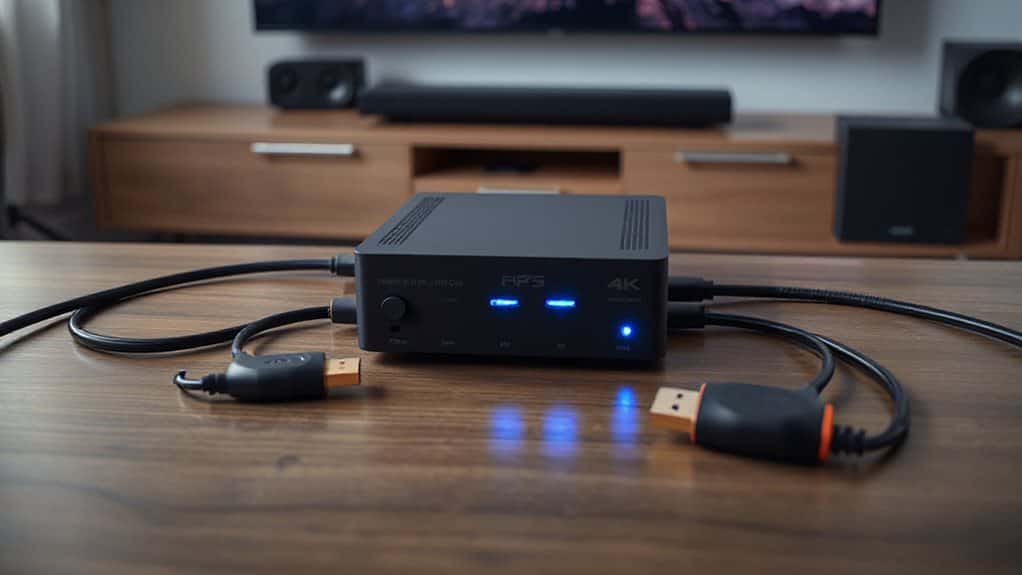
When picking an HDMI splitter for streaming to multiple devices, you’ll want to match the resolution and refresh rate your setup supports. Make sure it handles the audio formats you use and has the right port configuration for your devices. Don’t forget to check power needs and HDCP compatibility so your signal isn’t blocked.
Resolution And Refresh Rate
To get the most out of your streaming setup, you’ll want an HDMI splitter that matches the resolution and refresh rate capabilities of your source device and displays. Make sure it supports the highest specs your devices offer—like 4K@60Hz or even 4K@120Hz—because the splitter will default to the lowest common denominator. Check the HDMI version: HDMI 2.0 handles up to 18 Gbps, which works for 4K@60Hz with full color, while HDMI 2.1’s 48 Gbps is needed for 4K@120Hz or 8K. If you’re using high refresh rates or features like HDR and VRR, confirm the splitter explicitly supports them. Also, use certified high-speed cables under 3–5 meters to maintain signal quality. Poor cables can cause dropouts, especially at higher bandwidths. Always verify specs on the product label or datasheet to avoid compatibility issues.
Audio Format Compatibility
While your HDMI splitter handles video seamlessly, it can still create audio issues if it doesn’t support the right formats. Make sure your splitter and all connected devices support the same audio formats—like Dolby Atmos, Dolby TrueHD, DTS-HD, or LPCM 7.1—since the splitter will only pass formats every device can decode. Check that your splitter, source, and displays support matching HDMI versions (2.0 or 2.1) and HDCP standards, as mismatches can downgrade audio quality. Look for models with EDID management or automatic negotiation to help your source output compatible audio. If you want full-quality Atmos or lossless audio, confirm the splitter supports bitstream passthrough or eARC. Avoid relying on optical audio, since it’s limited to compressed 5.1. Use HDMI for high-bitrate, lossless surround sound.
Port Configuration Options
If you’re setting up multiple displays for streaming, choosing the right port configuration is key to a smooth experience. Decide whether you need a splitter-only setup (1→many mirrored outputs) or a bi-directional model that can also switch between two sources. Pick the number of outputs you actually need—common options are 1→2 or 1→4—with higher-port models often requiring external power. More ports mean more heat and potential signal loss, especially over long cables. Look for splitters that handle mixed resolutions, so you can run a 4K TV and a 1080p monitor at the same time without handshaking issues. If audio routing matters, choose a model with ARC/eARC or separate audio outputs. Check if the unit needs a USB or AC power adapter, and make sure the port layout fits your space and cable lengths.
Power Source Requirements
Since not all HDMI splitters deliver the same level of performance, your choice of power source plays a critical role in maintaining a stable, high-quality signal across multiple displays. Passive splitters draw power from the HDMI source or a USB port and work for basic 1→2 setups at lower resolutions, but they often fail with 4K@60Hz or long cables. For reliable performance, especially with 4K, HDR, or deep color, use an active splitter with an external power supply. It amplifies and retimes the signal, ensuring compatibility and stability. If you’re driving more than two screens or daisy-chaining splitters, powered units at each stage prevent handshake issues and signal loss. Always check that your power source—AC adapter or USB—meets the splitter’s voltage and current needs. An underpowered supply can cause dropouts, so plug into a reliable outlet or high-current USB port for seamless streaming.
Hdcp And Copy Protection
When streaming protected content like 4K HDR video from services such as Netflix or Disney+, you’ll need an HDMI splitter that supports the right version of HDCP—otherwise, your screen may go black or drop to a lower resolution. For 4K@60Hz HDR, make sure both your source and splitter support HDCP 2.2 or higher. If any connected device only supports HDCP 1.4, the splitter may downgrade the signal for all displays. Some splitters handle HDCP handshaking per output, but they often adjust to the lowest common version across devices. Avoid splitters advertising “HDCP bypass” unless verified, as they may not work with major streaming apps. Also, remember that AV receivers, soundbars, or capture cards in the chain must support the required HDCP version—otherwise, playback or recording can fail. Check specs carefully to confirm full compatibility.
Cable Length And Quality
Signal integrity hinges on the quality and length of your HDMI cables, especially when distributing high-bandwidth content like 4K HDR to multiple displays. Use high-quality HDMI cables rated for your target bandwidth—HDMI 2.0 for 4K@60Hz, HDMI 2.1 for 4K@120Hz or 8K. Look for cables with lower AWG (24–26) and strong shielding to reduce interference and signal loss. Keep cable runs under 5 meters when possible; longer passive cables often cause dropouts. For greater distances, switch to active, amplified, or fiber HDMI cables. When splitting signals, use equal-length, shorter cables to each display to maintain sync and quality. If you’re seeing handshake issues or reduced resolution, try powered splitters or HDMI extenders. Don’t rely on cheap or overly long cables—they’re the most common cause of poor performance. Choose wisely for reliable, clean signal distribution.
Frequently Asked Questions
Can HDMI Splitters Work With Gaming Consoles?
Yes, you can use HDMI splitters with gaming consoles. They’ll send your game’s signal to multiple screens at once, so you can play on more than one display without losing quality or lagging too much. Just pick a splitter that supports your console’s resolution and refresh rate.
Do Splitters Support Audio Return Channel (ARC)?
Yes, you’ll need an HDMI splitter that specifically supports ARC to pass audio from your TV back to your sound system. Not all splitters do this, so check the specs carefully before buying to guarantee you get one with full ARC compatibility.
Are HDMI Splitters Compatible With Older TVS?
Yes, you can use HDMI splitters with older TVs, but you’ll need to check if your TV has an HDMI input. Just make sure the splitter and cables match your TV’s HDMI version, or you might lose some quality or features.
Will a Splitter Reduce My Internet Speed?
No, a splitter won’t reduce your internet speed. It only copies the video signal to multiple screens. Your Wi-Fi or Ethernet handles internet, not the splitter. So stream freely—your connection stays just as fast.
Can I Use a Splitter With a Soundbar?
Yes, you can use a splitter with a soundbar, but make sure it supports audio pass-through. Connect your devices to the splitter, then link the splitter’s output to your TV and soundbar using ARC or eARC for the best sound quality.
Wrapping Up
You now know the top HDMI splitters for smooth multi-device streaming. Choose one that matches your resolution, refresh rate, and device count. Look for features like 4K/60Hz, HDR, and ARC support when needed. Always check compatibility with your devices. A quality splitter guarantees reliable performance without signal loss. Pick wisely, connect easily, and enjoy seamless viewing across all screens.


