The main difference between paid and free VPNs in Australia is security, speed, and access. Paid VPNs offer unlimited data, more server locations, and stronger features, making them better for streaming, privacy, and large downloads. Free VPNs usually have data caps, fewer servers, and weaker security, which can limit performance and compromise privacy. If you’d like clear details on which option suits your needs, continue exploring these differences.
Quick Guide
- Paid VPNs offer unlimited data, more server locations, and better access to geo-restricted content compared to free VPNs.
- Free VPNs often have weaker security, privacy risks, and slower speeds due to limited resources and high user load.
- Paid services typically have transparent no-logs policies and independent audits, enhancing trustworthiness.
- Free VPNs may sell user data or display intrusive ads, posing privacy and security concerns.
- Paid VPNs provide more reliable streaming, broader device support, and consistent performance for high-bandwidth activities.
What Are the Main Differences Between Free and Paid VPNs?
The main differences between free and paid VPNs revolve around features, speed, and privacy.
Free VPNs often have data caps, limited server locations, and lack advanced security features like kill switches.
Paid VPN services offer unlimited data, more server options, and stronger security, with transparent privacy policies that prioritize user privacy and minimize logging.
What Do VPNs Do and How Can They Help You?
VPNs work by encrypting your internet data, creating a secure connection that protects your online activities from hackers and eavesdroppers.
They mask your real IP address with remote servers, helping improve online privacy and bypass geo-restrictions.
VPN encryption enhances security software, making your internet connection more private and safeguarding your data encryption from intrusive tracking.
Additionally, choosing a VPN with a limited server network can impact your connection speed and reliability, especially in remote areas.
How Do VPNs Protect Your Privacy and Security?
VPNs protect your privacy and security by encrypting your internet traffic, which makes it unreadable to hackers and your internet service provider.
They also hide your real IP address and location, preventing websites and advertisers from tracking your online activities.
Additionally, VPNs secure your connection on public Wi-Fi networks, keeping sensitive information like passwords and financial details safe from cyber threats.
Furthermore, using a VPN can help you avoid Mode Not Supported Samsung TV errors by ensuring your device settings are compatible with the network configurations.
Data Encryption Methods
Data encryption is the backbone of online privacy when using a VPN. Encryption protocols like AES-256 safeguard your data, making it unreadable to outsiders.
VPN encryption creates a secure tunnel between your device and the server, relying on strong protocols such as OpenVPN or WireGuard. This guarantees data security, even if intercepted, protecting your freedom to browse securely.
Masking Online Activity
When you connect to a VPN, your online activity becomes much harder for outsiders to trace. VPNs mask online activity by encrypting your internet traffic and hiding your real IP address.
This protects your online privacy, data security, and prevents tracking by websites and advertisers. Your internet traffic remains anonymous, safeguarding your digital footprint from monitoring or interference.
Securing Public Wi-Fi
Ever wondered how to stay safe when using public Wi-Fi? VPNs protect your privacy by:
- Encrypting data, shielding sensitive info from hackers
- Preventing DNS leaks, keeping your browsing private
- Masking your IP, making it harder for cybercriminals to target you
A secure connection guarantees your online activities remain private and protected from threats.
How Do Speed and Data Limits Impact Your VPN Experience?
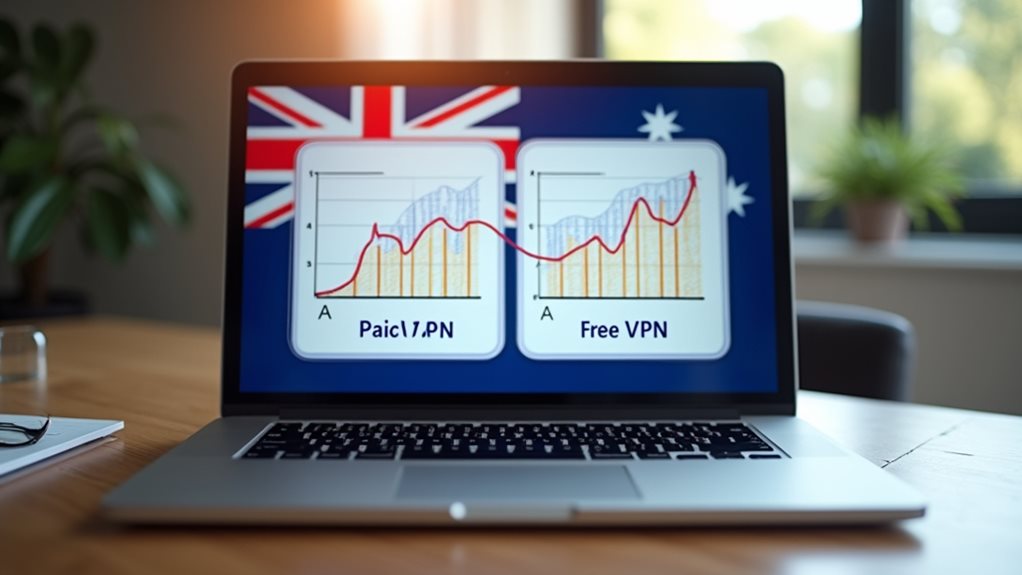
Limited speed and data capacity can markedly affect your VPN experience, especially if you rely on it for streaming or large downloads. Free VPNs often impose data limits, causing interruptions and degraded quality. A VPN’s speed and reliability are crucial factors that determine how well it can handle your online activities. Speed reductions with free options hinder connection speeds, while paid VPNs offer unlimited data and higher speeds, ensuring smoother streaming and more reliable browsing for those seeking online freedom.
Why Do VPN Server Locations and Geographical Access Matter?
VPN server locations directly impact your ability to access certain websites and content. With a larger server network, you can:
- Bypass geo-restrictions on streaming content
- Access censored or blocked sites in your region
- Enhance online freedom by choosing servers in multiple countries
- Both VPN and Smart DNS can be used to bypass location restrictions, but VPNs offer traffic encryption, providing additional security.
Can Free and Paid VPNs Unblock Streaming Services and Support Gaming?
While free VPNs may seem like a cost-effective way to access streaming services and support gaming, they often struggle to unblock popular platforms like Netflix or Hulu due to limited server networks and IP blocking.
A paid VPN, with dedicated servers, provides more reliable access, faster speeds, and better support for streaming and gaming activities.
Additionally, paid VPNs often offer software updates that enhance security and performance, ensuring a smoother experience.
Are Free VPNs Truly Free? What Are the Hidden Costs and Fees?
Many people assume free VPNs are truly free, but hidden costs often threaten your privacy and security. These include:
- Limited free data or bandwidth limits that slow your connection.
- Malware risks from intrusive tracking scripts or malicious software.
- The need to upgrade to paid plans for full features like speed and server access.
- Some free VPNs may restrict access to certain content or regions, limiting your ability to watch NBA games reliably.
Stay cautious—free VPNs can compromise your privacy.
Which VPNs Are Easiest to Use for Beginners?
Choosing a VPN that’s easy to use can make a big difference, especially if you’re new to online privacy tools. Look for VPN apps with a user-friendly interface, clear setup instructions, and simple guidance.
VPNs like TunnelBear, Proton VPN, Windscribe, Hide.me, and Hotspot Shield offer easy-to-use designs that help beginners connect quickly and confidently, enabling your online freedom.
How Trustworthy Are VPN Providers’ Privacy Policies and Audits?
How trustworthy are VPN providers’ privacy policies and audits? Reputable providers often publish transparency reports and undergo third-party audits, confirming their no-logs claims and security. Consider these points:
- Independent audits verify privacy and no-logs claims.
- Transparency reports reveal data collection and sharing practices.
- Trustworthy policies clearly state user data handling, ensuring security and privacy.
- It’s also important to be aware of company reputation and any potential government scrutiny that could impact the provider’s trustworthiness.
When Is a Free VPN a Good Choice for You?
A free VPN can be a good choice when your online activities are limited to casual web browsing or testing basic features without costs.
If privacy risks are minimal and you only need to bypass simple geo-restrictions with a limited server selection, a free VPN like Proton VPN suits light activities such as email or quick searches.
Which VPN Type Is Best for Travel, Streaming, or Privacy?
When it comes to travel, streaming, or protecting your privacy online, the type of VPN you choose can greatly impact your experience. Consider these factors:
- Paid VPNs offer faster speeds, more servers, and stronger security.
- Free VPNs often have limited server options and slower performance.
- For privacy, paid VPNs provide better encryption and no-logs policies, ensuring freedom and security.
- Understanding potential sync timing synchronization failure issues can help ensure a stable and secure connection during your online activities.
How to Decide Between Free and Paid VPNs in Australia
When choosing between free and paid VPNs in Australia, consider your priorities for privacy, speed, and features. Free VPNs often have data limits and fewer security options. Paid services typically offer better performance and more advanced tools. Your decision should align with your specific needs and budget to guarantee you get the right balance of security and functionality. Additionally, some VPNs have restrictions on streaming or accessing certain content, so compatibility with streaming devices can be an important factor to consider.
Privacy and Data Security
Choosing between free and paid VPNs in Australia depends largely on how much importance you place on privacy and data security.
- Paid VPNs often have transparent, audited no-logs policies, reducing data leaks.
- Free VPNs may track user data or sell it, risking your privacy.
- Strong encryption in paid options better protects your data from breaches and unauthorized access.
Speed and Performance
Speed and performance are key factors to weigh when choosing between free and paid VPNs in Australia.
Free services often reduce VPN speed due to limited server networks and high user loads, causing slower connection speeds.
Paid VPNs generally offer better performance, consistent speeds, and a larger server network, making them ideal for reliable, high-bandwidth activities.
Features and Accessibility
Free VPNs often have limited features and access, which can impact your online experience. Consider these factors:
- Restricted server locations limit your ability to browse freely.
- Data caps hinder streaming and browsing.
- Lack of device support and security features reduces accessibility and user experience.
Paid VPNs offer more features, better security, and broader device support, ensuring greater freedom online.
Wrapping Up
Choosing between free and paid VPNs depends on your needs. Free options may suit casual browsing but often come with limitations and privacy concerns. Paid VPNs typically offer better speed, security, and server options, making them ideal for streaming or sensitive data. Assess your priorities and usage to make an informed decision. Always review privacy policies and consider reputable providers to guarantee your online safety and access.