Looking for secure file storage in Australia? The Apricorn Aegis 3NX and iStorage datAshur PRO top the list for Aussie businesses, offering FIPS-validated AES-256 encryption and tamper-resistant hardware to block breaches. These drives meet GDPR and compliance needs without relying on software, while epoxy-coated components deter physical tampering. Prioritize IP56-rated models for fieldwork or FIPS-certified options for regulated sectors like healthcare and finance. Their plug-and-play design guarantees simplicity, and remote management suits growing teams. Discover which features align best with your security priorities and operational demands.
Quick Guide
- Top-rated drives like Apricorn Aegis 3NX and iStorage datAshur PRO combine AES-256 hardware encryption with GDPR compliance for Australian SMEs.
- FIPS 140-2/3 validated drives ensure tamper-proof security, meeting legal and regulatory needs for healthcare, finance, and government sectors in Australia.
- Tamper-resistant hardware with epoxy-coated components and brute-force attack protection offers superior defense against physical and digital threats.
- Biometric access methods and remote management features cater to field operations while ensuring compliance and accountability for Australian businesses.
- IP56-rated drives balance rugged durability with advanced encryption, ideal for harsh environments without compromising data integrity or regulatory adherence.
Top 5 Encrypted USB Drives for Australian Businesses in 2024
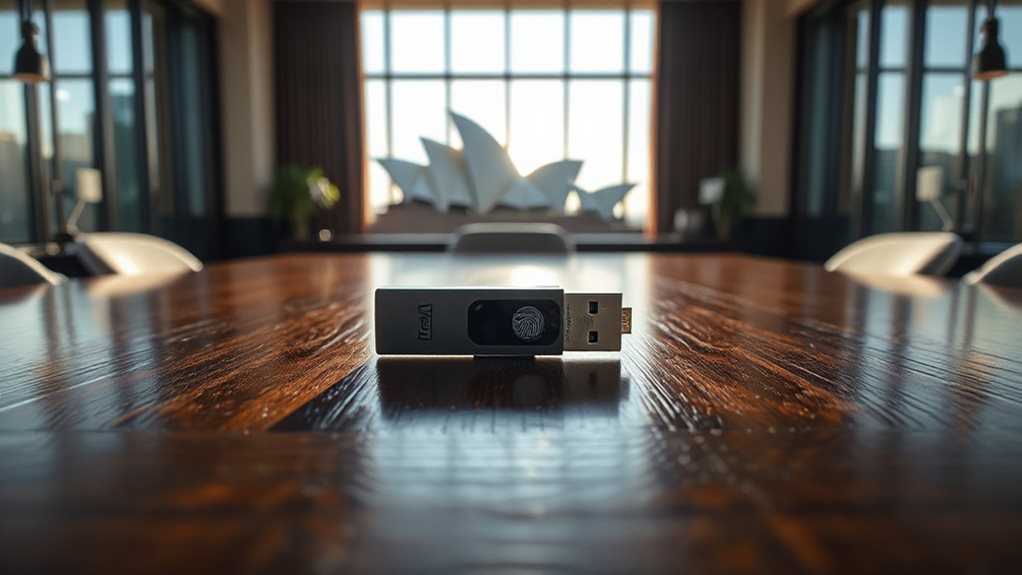
When it comes to safeguarding sensitive business data in 2024, Australian companies need encrypted USB drives that balance strong security, regulatory compliance, and reliability—here’s your breakdown of the top five options.
Apricorn Aegis 3NX: keypad PINs, USB-C. iStorage datAshur PRO: GDPR compliance, fast USB 3.2. Lepin Flash Drive: software-free AES encryption. Kingston D300S resists brute-force attacks, BadUSB. VP80ES: 1.92TB+, AES security—choose your tier freely. Kingston’s VP80ES integrates a touchscreen interface for password entry and standalone security management. Hardware-enforced AES-XTS-256 encryption and tamper-resistant designs are key features to prioritise when selecting a drive.
Critical Security Features Australians Must Prioritize: FIPS, IP56, and AES Encryption
Australian businesses choosing encrypted USB drives this year need to prioritize more than just encryption algorithms—they must focus on certifications and physical resilience.
FIPS 140-3 validation, like in iStorage’s datAshur PRO+ or DataLocker Sentry K350, guarantees tamper-proof security.
IP56 ratings protect against Australia’s harsh environments.
AES-256 hardware encryption, mandatory for FIPS, keeps data safe even if lost.
Prioritize these features to protect your freedom to operate securely anywhere.
Consider also choosing drives with hardware-based AES-256 and separate admin/user PINs to ensure encryption keys stay on-device and prevent unauthorized access.
FIPS 140-2 vs. IP56 Certifications: Which Matters More for Aussie Companies?
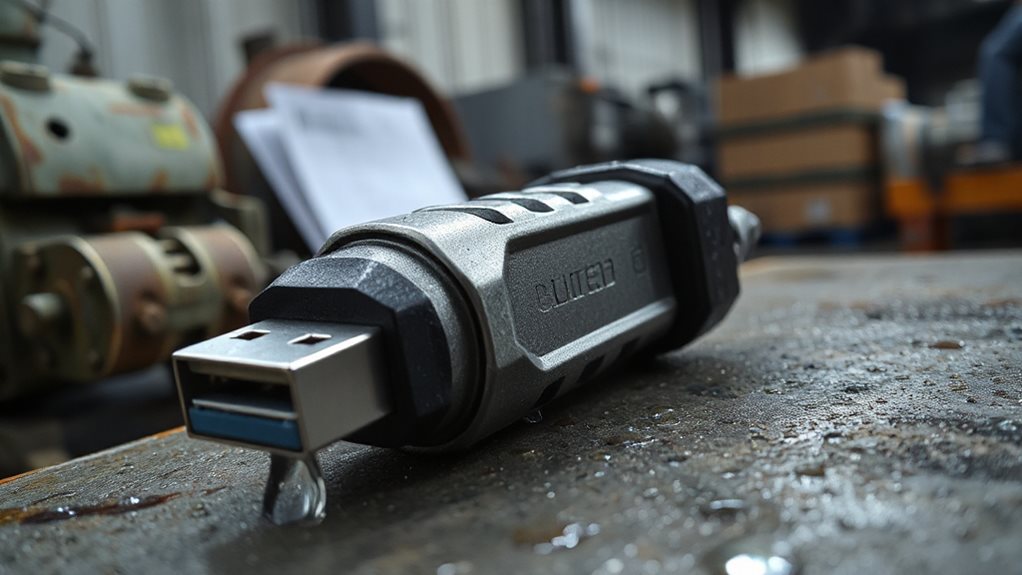
When evaluating certifications for encrypted USB drives, you must balance FIPS 140-2’s strict data security compliance against IP56’s physical durability.
Aussie companies handling sensitive data prioritize FIPS 140-2 to meet regulatory standards, while IP56’s dust/water resistance caters to rugged environments.
Deciding which matters more hinges on whether you need to protect data integrity or withstand harsh outdoor conditions.
Enable phishing-resistant MFA such as security keys to ensure access to encrypted drives remains secure even if passwords are compromised.
Compliance Vs Durability
While cryptographic compliance and environmental ruggedness both play key roles in protecting data, Australian businesses must decide which priority—FIPS 140-2 validation or IP56 certification—best aligns with their operational risks and regulatory obligations, especially when sensitive information is at stake.
If you operate in regulated sectors like healthcare or finance, FIPS 140-2 guarantees legal adherence and guards against breaches, while IP56 suits field workers facing dust, water, or extreme conditions.
You can’t ignore compliance if legal penalties loom, but durability matters if harsh climates threaten hardware.
For most Aussie companies, balancing both certifications offers peak protection without sacrificing flexibility.
Data Protection Priorities
Striking the right balance between compliance and durability hinges on clearly understanding what each certification addresses. FIPS 140-2 guarantees cryptographic compliance for secure data handling, critical if you handle U.S. government contracts or sensitive international data.
IP56 certification focuses on physical resilience—think dust/water resistance—protecting devices in harsh environments. While FIPS validates encryption rigor (with 140-3 phasing in post-2026), IP56 matters if physical threats outweigh regulatory demands.
Prioritize FIPS for high-stakes data security; IP56 if ruggedness is your frontline defense. Your priorities shape which matters more.
Security Certification Relevance
Whether your priority is securing sensitive data or surviving rugged environments, understanding the role of certifications like FIPS 140-2 and IP56 isn’t just technical jargon—it’s a strategic decision.
FIPS 140-2 validates encryption strength, vital for Aussie firms handling sensitive data or U.S. contracts. IP56 guarantees durability but doesn’t protect against breaches. Prioritize FIPS for compliance, security audits, and foolproof encryption—essential in regulated sectors. Let IP56 be secondary if your drives face dust or rain, but never trade it for cryptographic failsafes your business relies on.
Physical Keypads vs. Biometric Access: Best Options for Australian Workplaces
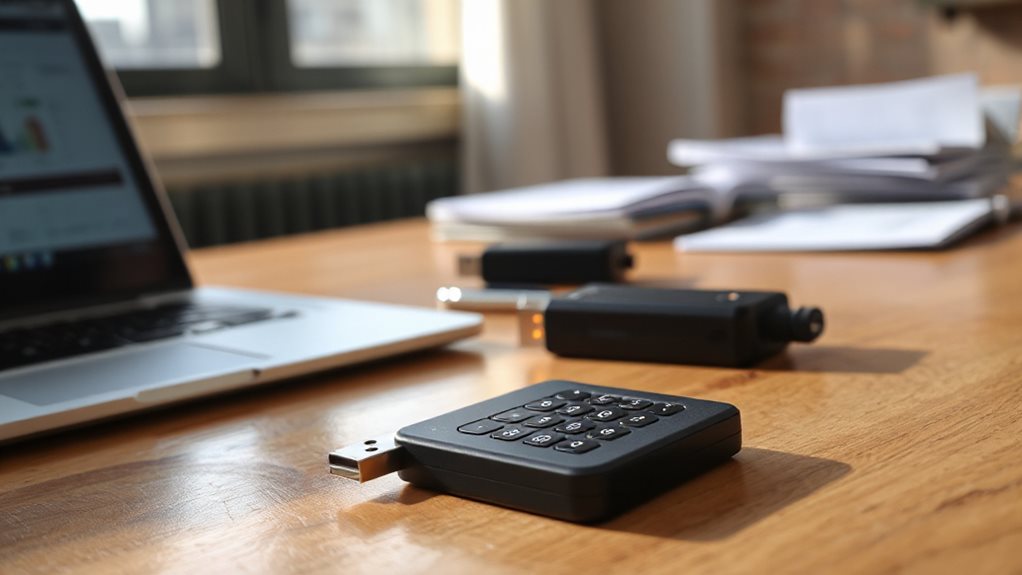
Physical keypads risk stolen credentials (60% of hacks) and hygiene issues, while biometrics can’t be shared, forgotten, or touched—ideal for contactless, hygienic access.
Biometric audit trails link actions to individuals reliably, and as adoption trends surge, blending biometrics with smartcards enhances security without stifling convenience.
Future-proof workplaces lean into biometrics for freedom from password hassles and resilient accountability.
Network monitoring with packet sniffers can help detect suspicious activity from compromised devices on the same network.
How Secure USB Drives Stop Ransomware and BadUSB Attacks
Secure USB drives tackle ransomware and BadUSB threats by combining military-grade encryption with physical safeguards, creating a fail-safe for sensitive data.
They use AES-256 encryption to lock files behind unbreakable codes, accessible only with your key. Tamper-resistant chips and epoxy-sealed hardware block physical intrusions, while offline backups let you recover data without paying ransoms.
These drives keep your info safe from digital and physical attacks, so you stay in control—no hackers, no hassle, just total protection.
Business vs. Personal Use: Which Encrypted USB Drive Fits Your Needs in Australia?
While your data’s sensitivity might be the same, the needs of businesses and individuals diverge sharply.
Business-grade drives like iStorage diskAshur Pro3 or Kanguru Defender prioritize remote management, FIPS certifications, and scalability, ensuring compliance and control over large teams.
Personal users lean toward plug-and-play simplicity: iStorage DatAshur Personal2 offers affordable AES encryption without management overhead, while Aegis Secure Key’s rugged build thrives on individual durability.
Your choice depends on whether freedom from oversight or freedom from complexity matters most.
What Certifications Like EAL5+ Mean for Australian Data Compliance
Certifications like EAL5+ aren’t just buzzwords—they’re benchmarks that shape how Australian businesses and individuals protect sensitive data.
EAL5+ means rigorous design, penetration testing, and resistance to advanced threats, meeting strict compliance standards like PKI Gatekeeper or MORs.
It signals trust in products—from IoT modules to smartcards—proving security without sacrificing usability.
Choosing EAL5+-certified drives guarantees your data stays private, compliant, and under your control, even in high-risk scenarios.
Australian Business Use Cases: Healthcare, Finance, and Field Work
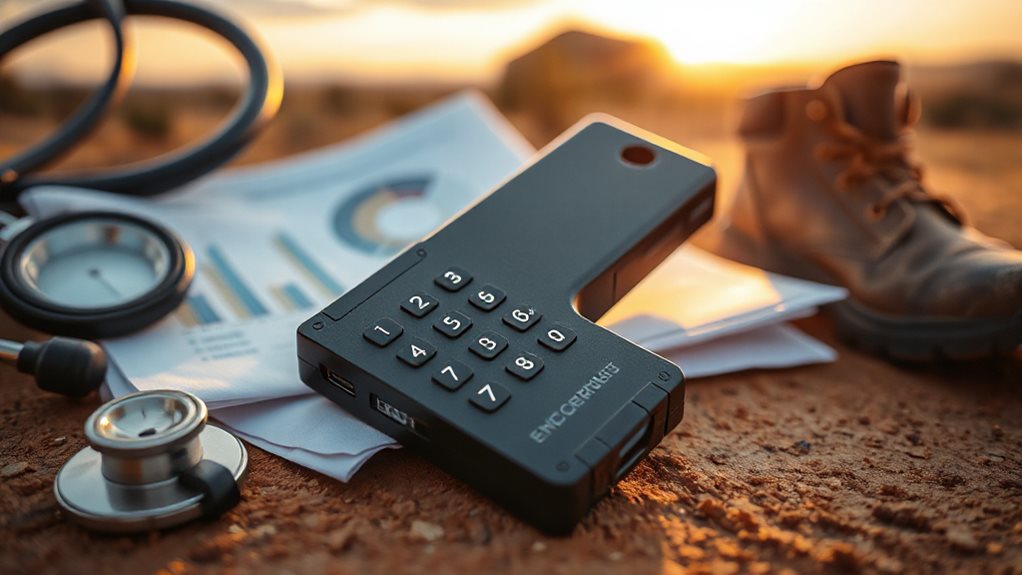
You’re dealing with high-stakes data when you work in healthcare, finance, or field operations down under—so why leave your security to chance?
Australian clinics encrypt patient records to dodge $9.77M breach averages.
Banks lock down drives with remote wipes to meet compliance.
Field teams use rugged USBs with biometrics to guard intel offsite.
FIPS-validated, tamper-proof drives aren’t just tools—they’re your freedom to operate without leaks slowing you down.
Why Hardware Encryption Beats Software for Aussie SMEs
Secure your business data from the inside out—hardware encryption offers Australian SMEs ironclad protection software solutions simply can’t match.
With encryption baked into the drive’s circuitry, there’s no reliance on OS security or user compliance. Cryptoprocessors guard keys, block brute-force attacks, and verify firmware, while epoxy-coated components deter tampering.
You gain seamless, always-on security plus freedom from constant updates—giving your SME both control and peace of mind without compromise.
Wrapping Up
Choosing the right encrypted USB drive means prioritizing FIPS 140-2/AES-256 compliance, IP56 durability, or biometric safeguards to shield sensitive Australian data. Opt for hardware encryption over software-only options to block ransomware and BadUSB threats effectively. Whether handling healthcare records, financial data, or fieldwork files, always match your device’s security features to your business’s compliance needs (like EAL5+ ratings). Never overlook physical protection layers—keypads or biometrics—since they curb breaches worse than passwords alone. Secure drives aren’t just safeguards; they’re essentials for Australian businesses steering through shifting cyber risks while meeting national data laws.